
Jumpstart Your Electrification Journey
In our last newsletter, we talked about why you should electrify. Now we are going to give you some concrete steps on how to go about doing so.
Electrifying means moving away from fossil fuels like the natural gas you use in your home and the gasoline you put in your car and replacing them with better, quieter, and more energy efficient versions. Whether you follow the textbook order or adapt as you go, here is how to tackle your home electrification journey.
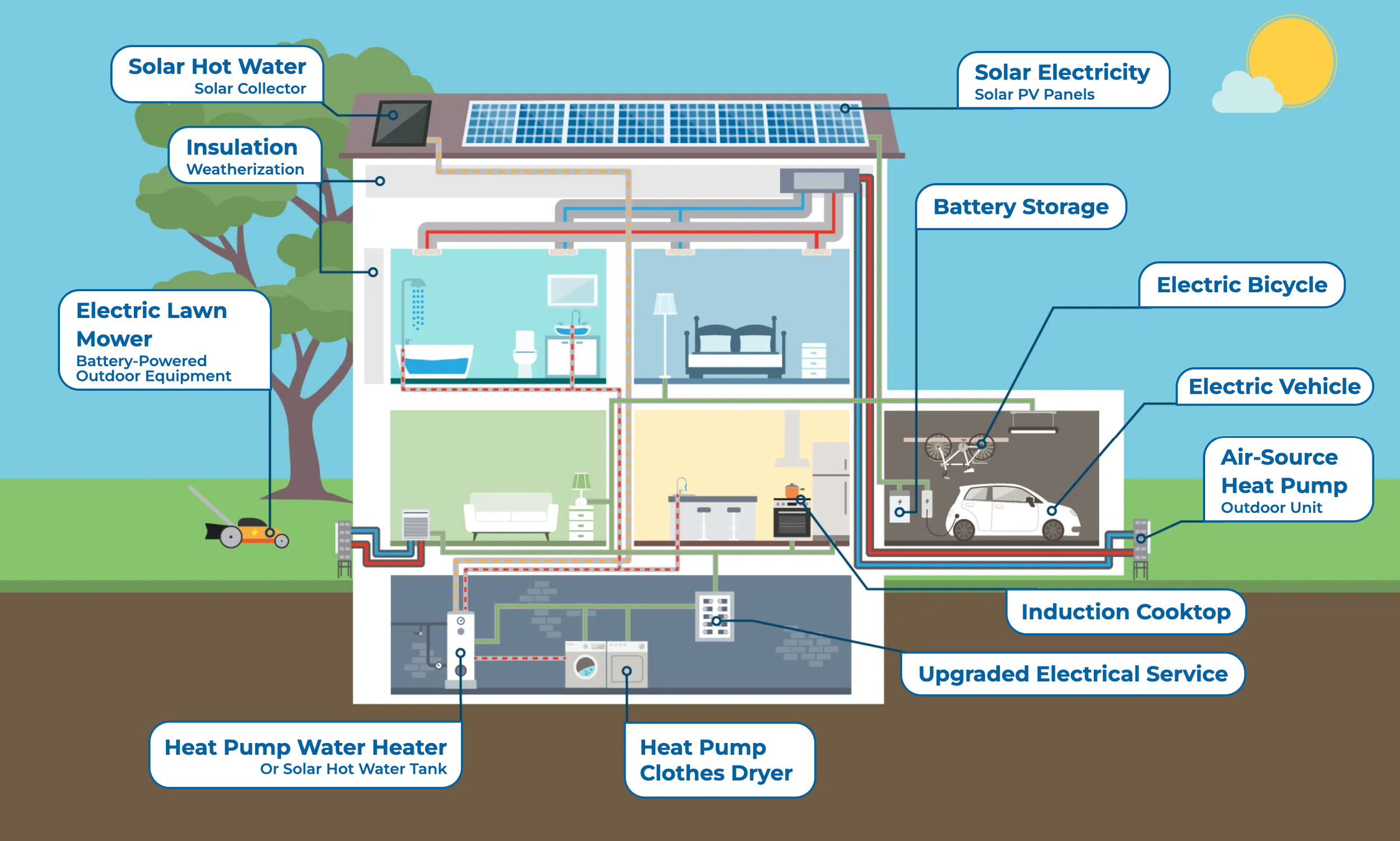
Part 1: The Ideal Step-by-Step Electrification Roadmap
If you have the flexibility to plan from scratch, the ideal path will give you the best efficiency and save you the most money over time.
Step 1: Get a Home Energy Assessment
Establish a Baseline: Before making big changes, schedule an assessment to learn your home’s specific needs. Check with your local utility company, as these are often offered for free or at a discount.
Pro Tip: Make sure your assessor is certified by a Qualified Certification Program and performs a blower door test to identify major air leaks.
Step 2: Grab the Low-Hanging Fruit (Lighting)
Switch to LEDs Immediately: Replace your old incandescent bulbs right away—even if they haven’t burnt out yet. You are spending way more for the electricity to keep those things going because incandescents waste massive amounts of energy as heat, while LEDs will instantly drop your electricity bill for minimal upfront cost.
Step 3: Weatherize Your Home
Seal and Insulate: Add insulation and seal gaps around doors and windows.
Why it matters: Weatherization works no matter what heating or cooling system you use. It keeps warm air inside during the winter and cool air in during the summer, reducing the overall energy needed to run your home.
Step 4: Electrify Your Appliances and Vehicles
Ditch Fossil Fuels: Upgrade gas or aging appliances (like water heaters, stoves, and HVAC systems) to modern electric equivalents like heat pumps and induction stoves. Look at the Energy Star ratings to make sure you are getting the most efficient model you can for your money. Consider an EV for your next vehicle purchase. If a new one is outside of your reach, look for used ones. Keep in mind the money you will save on gas and maintenance.
Step 5: Install Solar Panels
Size It Right: Hold off on solar until after you’ve weatherized and electrified. Your new electric appliances and vehicle will change your total power consumption. By waiting until the end, you can accurately size your solar array to meet your actual long-term needs.
Part 2: Real Life Happens—How to Pivot
While the ideal roadmap works on paper, real life often requires a different route. "Kitchen table decisions"—the choices families make over dinner when something breaks or an opportunity arises—often dictate the schedule.
Here’s how to navigate real-world detours:
When Electricity Rates Spike: You might choose to install solar panels first to cut monthly bills immediately, using those savings to fund future upgrades.
When Infrastructure Needs an Upgrade: You may need to take a detour and upgrade your electrical panel or outlets before you can add high-power electric appliances or an EV charger.
When Equipment Fails: Your HVAC might die before you’ve had a chance to finish weatherizing.
When a Deal Appears: A great rebate, tax credit, or sale might make it smart to jump out of order.
Motto to live by:"Before it dies, electrify." (Or at least: "When it dies, electrify.")
Part 3: Proactive Planning & Smart Execution
To avoid panicking during an emergency breakdown, prepare ahead of time using these key tips:
1. Do Your Homework Early
Research products, understand your electrical system's capacity, and identify qualified contractors before an appliance fails. Otherwise you’ll likely end up accepting whatever inefficient model the contractor has in stock. Doing research early ensures you get what you want.
2. Choose the Right Contractor
Don't assume any general installer has the right expertise. For instance, just because an HVAC contractor handles traditional AC units doesn't mean they have extensive experience sizing and installing modern heat pumps. Ask about their specific track record with electrification projects.
3. Consider Your Long-Term Factors
Before committing to big investments, evaluate:
How long you plan to stay in the home.
The age and condition of your roof (if adding solar).
The age of your current appliances (prioritize replacing the oldest or most vulnerable first).
4. Verify Rebates and Incentives
Before relying on a rebate or tax credit to finance a project:
Confirm you qualify (check income caps, location/zip code rules).
Confirm the equipment qualifies (check efficiency ratings, manufacturing requirements, etc.).
Ready to Get Started?
A great resource to kick off your planning is Rewiring America. They offer a personal electrification planner and a useful savings calculator to show exactly which local and federal rebates you qualify for.
By taking control of your energy choices today, you're well on your way to a more comfortable, efficient, and sustainable home!