
RGGIcide: PA Abandons Its Best Chance Against Climate Change
2025
Pennsylvania’s best chance for addressing the climate crisis has been thrown away to solve the state’s budget impasse. That opportunity was participating in the Regional Greenhouse Gas Initiative, known as RGGI and pronounced Reggie, an interstate cap, trade, and invest program. RGGI requires fossil fuel-fired power plants to purchase allowances to emit carbon dioxide (CO2). The number of allowances decreases each year, forcing a reduction of carbon pollution.
In addition, the proceeds from the sale of these allowances could be used to address climate change by investing in renewable energy, energy efficiency, fossil fuel worker transition, and support for environmental justice communities. These investments would have broader benefits: adding jobs that strengthen Pennsylvania’s economy, making our air more breathable, which improves our health while decreasing healthcare costs, and reducing electricity prices.
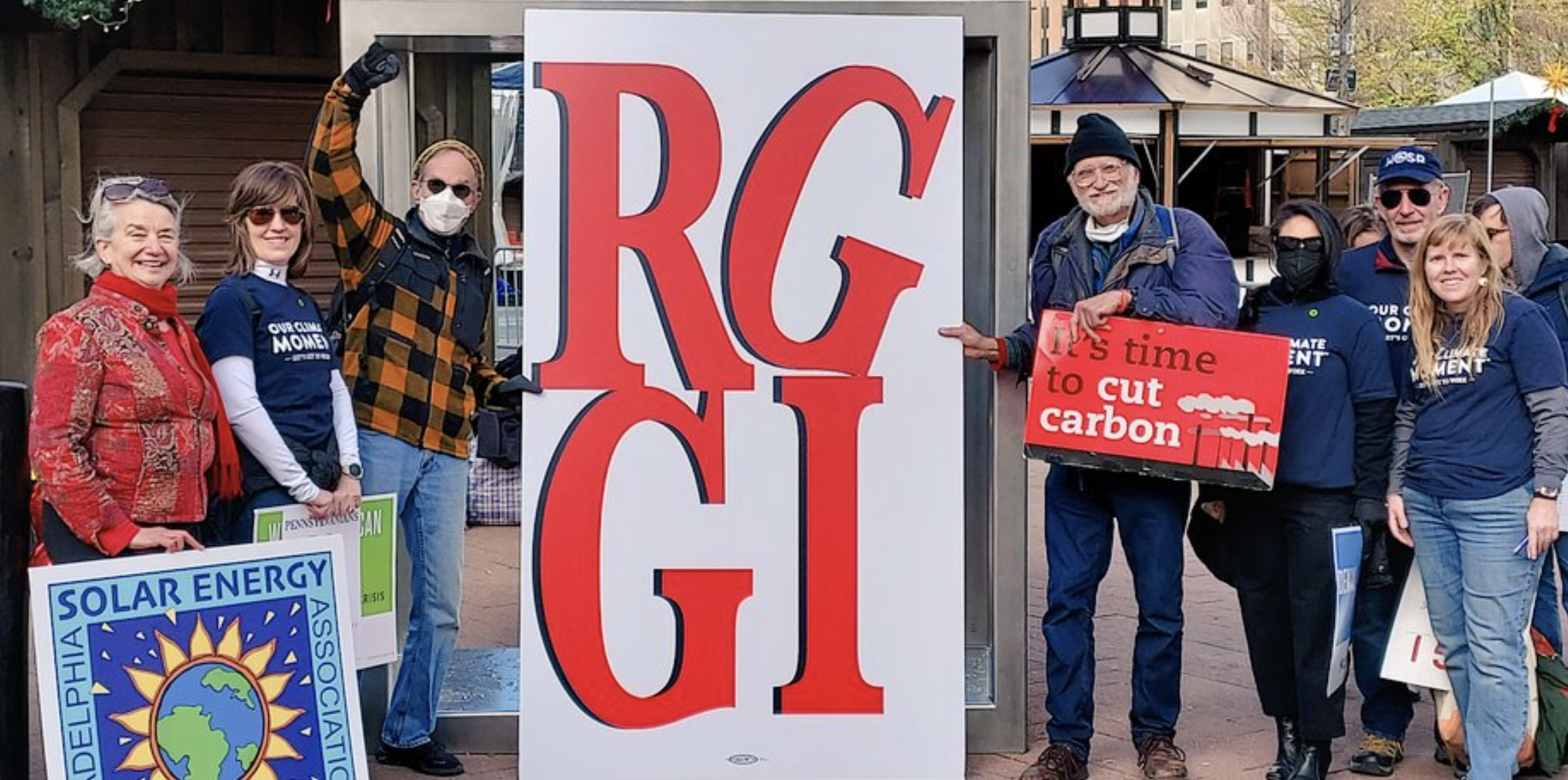
In 2019, former Pennsylvania Governor Tom Wolf signed an executive action for Pennsylvania to join RGGI. However, many state legislators and fossil fuel interests didn’t want this to happen. They sued to prevent Pennsylvania from participating in RGGI, primarily based on whether the power plant payments to emit CO2 was a tax or a fee: A tax would need approval by the state legislature. Pennsylvania’s participation in RGGI was paused while the lawsuit made its way through the courts, finally reaching Pennsylvania’s State Supreme Court, where it has been languishing for many months, most likely awaiting the 2025 election to release its ruling.
In the meantime, the Pennsylvania legislature has been battling it out to come to an agreement on the state budget, which was supposed to be passed on June 30. Sadly, they already decided to refuse to give any additional funding to public transit, which hasn’t seen any significant increase in state funding in the past decade (Note: it did get federal Covid money). In a last-ditch effort to get a budget passed, the Democrats used RGGI as a bargaining chip to get the State Senate (which is majority Republican) to agree to the most recent budget passed by the PA House (which is majority Democrat). They agreed to drop RGGI to get more money for education, an earned income tax credit, and other funding prioritized by the Democrats. In terms of the environment, they did get $25 million for solar for schools, and it freed up some federal money for solar panels. This is small potatoes compared to the hundreds of millions of dollars that RGGI would have brought to the state every year.
So what’s next for Pennsylvania and the climate crisis? Governor Shapiro has put forth his Lightning Plan, which includes the Pennsylvania Climate Emissions Reduction Act (PACER), which behaves similarly to RGGI except that it’s Pennsylvania-specific, so the allowances could only be traded within Pennsylvania. Additionally, it would give 70% of the revenue directly back to Pennsylvania residents as a rebate on their electric bill. While this sounds good, some of that money would be better spent on residential energy efficiency, which has a bigger bang for the buck in overall savings. The other 30% would be spent on projects that reduce air pollution, energy efficiency, and renewable energy, focused on energy communities that traditionally had fossil fuel infrastructure.
The other part of Shapiro’s Lightning Plan includes the Pennsylvania Reliable Energy Sustainability Standard (PRESS), which increases the amount of renewable energy utilities are required to use, as well as expanding the types of renewable energy that can be used. This will increase the reliability of the grid by diversifying the sources of electricity. It will also decrease electricity costs since renewables are less expensive than fossil fuels over their lifetime and have stable, predictable costs. Additionally, renewables are faster to build, which helps meet the ever-increasing energy demand.
Environmental advocates now need to pivot from focusing on RGGI to convincing Pennsylvania state legislators to pass PACER and PRESS, or come up with better alternatives. As Governor Shapiro has said, “Doing nothing is no longer an option.”
Further reading: https://acadiacenter.org/for-immediate-release-statement-on-pennsylvanias-rggi-withdrawal/