
Will Lightning Strike? The Future of Shapiro’s Energy Plan
2026
With the death of the Regional Greenhouse Gas Initiative (RGGI) in Pennsylvania, there is a shift in focus to Governor Shapiro’s proposed legislation known as his Lightning Plan. Shapiro’s Lightning Plan does have some promising provisions, but needs some major revisions to truly address the climate crisis. Overall, with the loss of RGGI, it is much better than nothing and should be supported.
One part of his plan is the Pennsylvania Climate Emissions Reduction Act (PACER) which sets up a carbon emissions cap and trade system, similar to RGGI, except this would be Pennsylvania specific. Under this program, 70% of the revenue collected from fossil fuel-fired power plants would be returned to Pennsylvania consumers through their electric utility bills. The other 30% of the revenue will be invested in clean energy projects. I contend that 70% would be better spent improving home energy efficiency, where the savings will be seen for years to come.
Another part of Shapiro’s Lightning plan is the Pennsylvania Reliable Energy Sustainability Standard (PRESS), which is a much needed update to the Alternative Energy Portfolio Standard (AEPS). PRESS provides incentives for alternative energy by requiring utilities to use a certain percentage of their electricity mix from a variety of alternative energy sources. By increasing the percentage required, it will increase this incentive. They can purchase renewable energy credits to help make up this mix.
Environmentalists are concerned that some of these energy sources are dirty, such as energy derived from waste coal. Other sources have an unproven track record as to whether or not it will actually help with the climate crisis, such as carbon capture and storage or hydrogen. Some of the energy sources are in early stages and have not proven to be able to work outside the research lab, such as fusion energy.
Tier I energy sources include wind, low impact hydro power, nuclear, geothermal, and others and will initially require 10.7% of energy generation from these sources, increasing by 3% per year until it reaches 35% by 2035. There are also Tier II and Tier III energy sources, each getting dirtier the higher the Tier number.
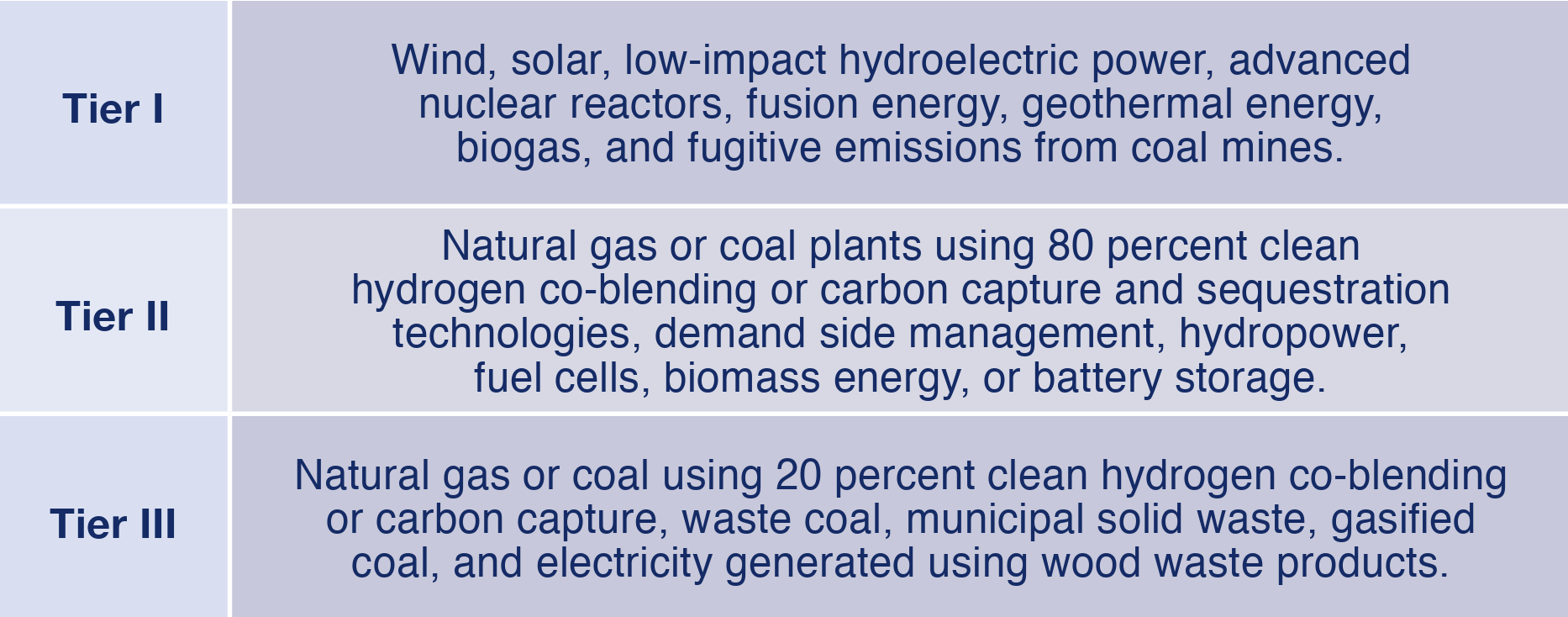
Table 1
The Reliable Energy Siting and Electric Transition (RESET) Board is another part of the Lightning Plan, which states it will speed up approval for energy projects, but some environmentalists are concerned that it will also allow dirtier energy projects to be built quickly and there are concerns that local community members will not have as much say into what energy projects are built in their local area.
One promising piece of legislation grouped under Shapiro’s Lightning Plan includes community energy, which allows people to subscribe to renewable energy sources such as a solar farm and then get a reduction in their electric bills based on its energy production. This is particularly beneficial to those who can’t put solar panels on their home, perhaps because of cost, shading or they rent.
Additionally there is Lightning Plan legislation to improve the Pennsylvania Economic Development for a Growing Economy (EDGE) related tax credits and to improve energy efficiency incentives including increasing utility rebate amounts for energy efficient appliances.
Governor Shapiro has stated that he has a 3 part test for any energy legislation:
Protect and create energy jobs
Address climate change
Reliable and affordable power
This proposed Lightning Plan legislation should help create energy jobs. I question whether we should protect energy jobs that are part of an industry that is actively destroying our planet and that the rest of the world is moving away from. Instead we should be taking proactive measures to help transition those workers to energy jobs of the future.
Whether or not his legislation addresses climate change is a mixed bag. It does encourage solar, wind, geothermal, and nuclear, all of which reduce greenhouse gas emissions. However, it also allows room for polluting and climate change related emissions such as natural gas and carbon capture and storage (CCS). Many contend CCS requires so much additional energy that the carbon emissions savings are zero or net negative. Promoting CCS also extends the lifetime of fossil fuel generation instead of focusing our efforts on moving away from fossil fuels.
In terms of reliable and affordable power, only time will tell on this one. Renewable energy is fast becoming the cheapest form of energy, and solar in particular can be built much faster than any other energy source, especially considering there is a long waiting time for gas turbines due to supply shortages. When you pair solar or wind with batteries, it makes it much more reliable. However, the Lightning Plan also encourages other energy sources that may not pan out financially, such as nuclear and hydrogen.
Shapiro’s Lightning Plan does have some promising provisions, but needs some major revisions to truly address the climate crisis. However, politically in Pennsylvania the powerful fossil fuel lobby will make it difficult to pass any legislation that will reduce fossil fuels. All these proposals are still bills that are making their way through Pennsylvania’s state legislature, which is slow to pass bills, and has a Republican majority in the state Senate and narrow Democratic majority in the state House. Hopefully this will change in the November election and we will elect strong environmental leaders that will revise this legislation to be more climate friendly and push it through to the finish line. All the more reason to get out and vote and pay attention to all the candidates up and down the ballot.
RESOURCES
RGGI history: https://www.phillynetzero.org/blog/pennsylvanias-entry-into-rggi